Introduction
Shoei Baro is one of anime’s most forceful football personalities, introduced in Blue Lock as a striker whose confidence is as intimidating as his finishing. He is commonly identified by the title “King,” a label that reflects more than simple arrogance. Baro expects the match to revolve around his decisions, his movement and, ultimately, his shot.
That self-centred approach makes him an especially effective villain archetype within a competitive sports story. Baro is not presented as a conventional criminal or outside antagonist. His opposition comes from his football philosophy. He believes the field belongs to the strongest individual, and he treats teammates, rivals and tactical systems according to whether they help or obstruct his rule. Fan and editorial descriptions regularly call him the “king of the field,” a “power scorer” and a “selfish egoist.” Those phrases capture the character’s central appeal: Baro is difficult to support unconditionally, but impossible to ignore.
| Profile | Verified information |
|---|---|
| Character | Shoei Baro |
| Series | Blue Lock |
| Category | Anime character |
| Common identity | “King” of the field |
| Character type | Power-focused striker and antagonistic rival |
| Documented appearances | The Blue Lock Wiki’s anime index lists “Dream, Debut” and “Monster” under Season 1 appearances. |
Character Background
Baro’s background is best understood through his position inside the Blue Lock project rather than through a detailed family history. The supplied material identifies him as a contender in Blue Lock and places him in several of the series’ competitive contexts, including the match involving Team Z and Team X, the U-20 Japan selection period and the Neo-Egoist League setting connected with Ubers.
His first major impression comes from the way he enters competition. A report on his early appearance describes him in relation to Team Z’s confrontation with Team X, while another reference highlights his antagonistic shot in episode 18. These descriptions establish the role he occupies in the anime: Baro is a rival whose presence changes the emotional temperature of a match. Even when he is not the story’s central viewpoint, his decisions create pressure for the players around him.
The name appears in more than one English form in the supplied material. “Shoei Baro” is the requested and widely used form here, while other references use “Barou Shoei.” The variation does not alter the character being discussed.
Personality and Traits
Baro’s personality is built around possession of status. He does not merely want to score; he wants the game to confirm his authority. Descriptions of him repeatedly frame him as someone who “doesn’t follow kings”—he is the King. That wording explains why the character reads as a villain even within a football environment. His threat is ideological: he rejects the idea that a striker should quietly fit into another player’s story.
His ego is direct, visible and confrontational. Baro’s confidence does not rely on modesty or social charm. He projects power, demands recognition and treats his own preferred style as the natural order of the pitch. The supplied character discussions call him self-centred, arrogant and selfish, but those traits are paired with an equally strong sense of identity. He knows what kind of forward he wants to be, and his refusal to dilute that identity gives him dramatic weight.
The “villain” label therefore works as a narrative shorthand rather than a moral verdict. Baro’s intensity makes him antagonistic to other players, yet it also makes him a clear expression of Blue Lock’s interest in ego. His role asks whether a player can become decisive without allowing the team to erase his individuality. That question is why his arrogance feels purposeful instead of decorative.
Appearance and Design
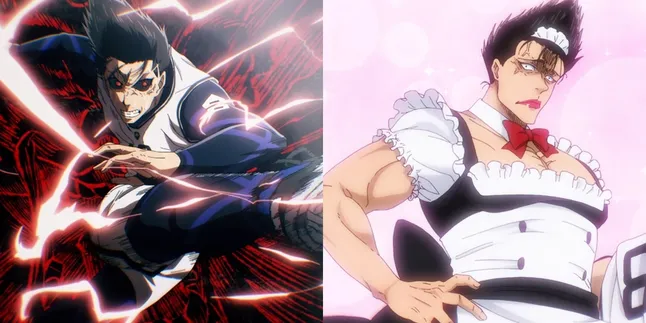
The available references consistently present Baro as a visually imposing football character. His design communicates physical presence before he even speaks or takes a shot. Fan descriptions and character-profile material emphasise his imposing forward image, while the many drawing references focus on reproducing his recognisable silhouette and expression in both standard and chibi styles.
His visual identity is closely tied to the “King” concept. Promotional fan edits, illustrations and design pieces repeatedly use crowns, regal language and commanding poses to express the same idea: Baro should look like a player who expects the pitch to yield to him. That consistency matters. His appearance is not separate from his personality; the design turns his ego into something immediately readable.
References such as this step-by-step Baro drawing guide and a separate chibi drawing reference show the character’s strong fan-recognition value. A premium design illustration also presents him through the language of unstoppable power, reinforcing how closely his visual presentation is tied to dominance.
Abilities and Powers
Baro’s defining ability is his power-oriented scoring style. The research material repeatedly characterises him as a physically imposing forward and a “power scorer.” That description distinguishes him from players whose appeal is built primarily around delicate technique or elaborate passing. Baro’s football identity is based on turning strength, confidence and a direct attacking mindset into goals.
His shooting is central to his threat. A reference describing his “antagonistic shot” in episode 18 points to the dramatic function of his finishing: the shot is not simply a technical action, but a declaration of authority. When Baro strikes, the moment is framed as an attack on the opposition’s control of the game.
Baro’s greatest weapon, however, is the combination of physical force and ego. A strong shot becomes more dangerous when the player is willing to claim the decisive moment for himself. His approach reflects the selfish-egoist concept associated with the series: he does not wait for permission to become the centre of the attack. He seeks the route that allows his own scoring instinct to define the play.
The supplied sources do not verify a complete technical list, numerical rankings or official measurements for Baro. It is therefore more accurate to describe his abilities through the documented themes of power, forward play and finishing than to attach unsupported names or statistics to particular techniques.
Role in the Story
Baro functions as a pressure point in Blue Lock. His presence tests whether other players can impose their own ideas against someone who already behaves as though victory belongs to him. That makes him more than a standard rival. He is a challenge to the assumption that cooperation should always be the highest football virtue.
The supplied episode material specifically connects him with Team Z versus Team X and with the antagonistic quality of his shot. Later references associate him with Ubers during the Neo-Egoist League. Across those contexts, his identity remains stable: Baro is the player who wants to dictate the shape of the match rather than simply participate in it.
His importance also comes from contrast. The series’ central conflict is not only about which player is strongest; it is about what kind of ego can survive in a team sport. Baro represents the uncompromising answer. He wants his individual will to remain visible, even when football demands coordination. That position makes him an ideal rival for players who try to understand, redirect or overcome the logic of the field around them.
Relationships and Connections
The strongest documented connection in the supplied research is Baro’s opposition to Yoichi Isagi. Several references pair their names while describing Baro as a villain-like or antagonistic presence. This relationship is important because Isagi is repeatedly used in the research context as the player standing opposite Baro’s authority. Baro’s “king” identity gains dramatic force when another player challenges his claim to control the match.
Baro is also linked to Team X in the early competition and to Ubers in the Neo-Egoist League material. These team affiliations show how his character operates inside changing football structures. He may be placed within a side, but his reputation is built around individual dominance. The tension between belonging to a team and behaving as its sovereign is one of his most useful narrative contradictions.
The supplied research does not verify family members, a romantic relationship or a confirmed personal history outside football. Those details are omitted rather than filled in with speculation.
Major Story Arcs
Team Z versus Team X: The match is one of the clearest early contexts attached to Baro in the research. It introduces the character as a force capable of making a team encounter feel like a confrontation with a single dominant striker.
The episode 18 confrontation: A supplied reference specifically calls attention to Baro’s antagonistic shot in episode 18. The moment is remembered less as an ordinary play than as an expression of his villain-like presence and his refusal to surrender the spotlight.
U-20 Japan period: Crunchyroll’s Blue Lock character guide includes Shoei Baro among the characters associated with the Blue Lock XI discussion surrounding U-20 Japan. The supplied snippet does not provide a complete account of his actions in that section, so the safest description is that Baro remains part of the series’ high-level selection conversation.
Neo-Egoist League and Ubers: Later character references place Baro with Ubers and describe his journey through the Neo-Egoist League. This setting extends the same conflict between organised football and personal sovereignty. Baro’s identity continues to be marketed through arrogance, strength and the “King” concept rather than through a softened team-player image.
Character Development
Baro’s development is not best described as a simple change from bad to good. His defining traits—confidence, selfishness and a demand for control—remain the foundation of his appeal. What changes is the dramatic meaning of those traits when the competition becomes more demanding.
Early descriptions make him feel like an obstacle: an arrogant striker who dominates the emotional space of a match. Later references place him in Ubers and the Neo-Egoist League, where his ego is tested within more advanced competitive structures. The character’s interest lies in whether a self-proclaimed king can preserve his authority when the field contains other players with equally strong ambitions.
That tension gives Baro unusual durability as a rival. If he simply abandoned his selfishness, he would lose the quality that makes him distinct. His development instead depends on how effectively he turns that selfishness into football value. The “king” must prove that his rule produces results, not merely loud declarations.
Voice Actors
The supplied research does not provide verified Japanese or English voice-actor credits for Shoei Baro. No names are included here because the available evidence does not establish a reliable cast listing.
Readers interested in related entertainment figures can also explore Akira. For more profiles in this area, browse the Anime Films section.
External References
- Shoei Baro – Blue Lock Wiki – Fandom
- Shoei Baro Blue Lock
- Blue Lock anime character Shoei Baro
- Understanding Shoei Baro: The King of Blue Lock
Frequently Asked Questions
Who is Shoei Baro?
Shoei Baro is a striker in Blue Lock, known for his imposing presence, power-focused scoring style and “King” persona.
Why is Baro called the King?
He is called the King because he expects to control the field and treats his own attacking will as the central force in a match.
Is Shoei Baro a villain?
He is often described as a villain-like or antagonistic character, but that label refers to his role as a confrontational rival rather than to conventional criminal behaviour.
What kind of striker is Baro?
Baro is presented as a physically imposing power scorer. His identity centres on direct attacking force, finishing and the desire to claim decisive moments for himself.
Who is Baro connected to in the story?
The supplied material most clearly connects him with Yoichi Isagi, Team X, the Blue Lock XI discussion around U-20 Japan and Ubers in the Neo-Egoist League.
What is Baro’s most important character trait?
His defining trait is an uncompromising ego. Baro wants his individuality and authority to remain visible even inside a team sport.
Does Baro work well with a team?
Baro is associated with teams, including Team X and Ubers, but his character is defined by the tension between team structure and his demand to rule the attack himself.
Are Shoei Baro’s voice actors confirmed here?
No. The supplied research does not verify Japanese or English voice-actor credits, so no voice-cast names are listed.