Introduction
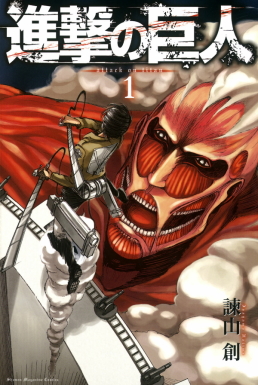
Attack on Titan is a Japanese dark fantasy anime television series adapted from Hajime Isayama’s manga, which ran from 2009 to 2021. The anime turns a stark survival premise into a long-form story about political power, military duty, inherited memory and the cost of freedom. Its central danger is immediate and physical: gigantic humanoid Titans attack the last known human settlements, forcing people to live behind enormous walls.
What begins as a battle for survival gradually becomes a mystery about the Titans, the walls and the world beyond them. The series is known for its severe consequences, rapidly changing alliances and willingness to question the simple division between heroes and monsters. Its Japanese title is Shingeki no Kyojin.
| Field | Details |
|---|---|
| Format | Dark fantasy anime television series |
| Source material | Hajime Isayama’s manga series |
| Anime run | 2013–2023 |
| Animation studios | Wit Studio, seasons 1–3; MAPPA, final season |
| Music | Hiroyuki Sawano for seasons 1–3; additional final-season music credits include Kohta Yamamoto |
| Original network | NHK General for the later television broadcast |
Story and Premise
Humanity lives inside three enormous concentric walls after Titans drove civilization to the edge of extinction. Most residents have never seen the outside world and regard the walls as their only protection. That security collapses when a Colossal Titan appears at the outer district of Shiganshina, creating an opening through which other Titans enter.
Eren Yeager witnesses the destruction of his home and the death of his mother. Alongside his adoptive sister Mikasa Ackerman and their friend Armin Arlert, he joins the military with the intention of fighting back. Their path takes them through the military’s Training Corps, the Garrison responsible for defending the walls and the Survey Corps, whose expeditions beyond the walls seek information at extraordinary human cost.
The early story focuses on rescue operations, battlefield tactics and the frightening limitations of human technology. Soldiers use specialized vertical maneuvering equipment to move around buildings and attack Titans at the back of the neck, their most reliable weak point. Yet the war changes when the characters discover that some Titans are intelligent, strategic and connected to human beings.
From there, the series expands beyond a straightforward monster attack. The identity of the Titans, the origin of the walls and the political structure protecting humanity become connected pieces of a much larger mystery. The plot eventually moves from the isolated districts inside the walls to international conflict, making questions of memory, oppression and retaliation as important as the next battle.
Characters and Voice Cast
The series’ emotional force comes from a large ensemble whose loyalties and beliefs develop under pressure. Eren’s determination is often courageous, but it can also become destructive. Mikasa combines exceptional combat ability with a fierce instinct to protect the people closest to her. Armin, physically less imposing than many soldiers, repeatedly proves the value of observation, imagination and strategic thinking.
The military cast adds several contrasting approaches to survival. Levi is a famously disciplined and highly capable Survey Corps soldier, while Erwin Smith leads through calculated risk and an almost relentless pursuit of the truth. Hange Zoë brings scientific curiosity to the study of Titans. Characters such as Jean Kirstein, Connie Springer, Sasha Blouse and Historia Reiss show how ordinary recruits are shaped by fear, friendship and responsibility.
The English-language cast includes Bryce Papenbrook as Eren Yeager, Trina Nishimura as Mikasa Ackerman and Jessie James Grelle as Armin Arlert. Yūki Kaji is the Japanese voice of Eren. The full cast and credit history can be compared through the series’ IMDb cast and crew listing. Isayama’s broader character roster is also catalogued in this character reference.
| Character | Role in the story | Selected voice credit |
|---|---|---|
| Eren Yeager | Central protagonist whose hatred of Titans drives his early decisions | Yūki Kaji; Bryce Papenbrook |
| Mikasa Ackerman | Elite soldier and Eren’s closest companion | Trina Nishimura in English |
| Armin Arlert | Strategist whose insight repeatedly changes the course of battles | Jessie James Grelle in English |
| Levi | Survey Corps captain known for extraordinary combat skill | Appears among the principal cast |
| Erwin Smith | Survey Corps commander who pursues the truth outside the walls | Appears among the principal cast |
World, Setting and Core Themes
The walls are more than defensive structures. They define geography, class and political authority. Life inside them is organized around the assumption that safety depends on remaining in a controlled space. When a wall falls, the result is not only a military emergency but also a crisis of belief: the population must confront how little it understands about the world it inhabits.
The Titans create a distinctive form of horror because they resemble people while behaving like forces of nature. Their size and unpredictable movement make every open space dangerous. The military’s equipment gives human characters mobility, but not certainty. Even experienced soldiers can be killed within seconds, and victories often require sacrifices that permanently alter the cast.
Survival is therefore tied to knowledge. The Survey Corps risks expeditions beyond the walls to recover information, while political leaders attempt to restrict or manipulate what citizens know. The series repeatedly asks whether ignorance can protect a society, and whether revealing the truth is worth the violence that may follow.
Later episodes complicate the idea of a clean war between humanity and monsters. National identity, historical memory and inherited guilt influence how different communities understand the same events. The story’s mystery structure allows these revelations to reframe earlier scenes rather than simply adding new plot information. Freedom remains a central ideal, but the anime examines what happens when one person’s freedom threatens everyone else.
Production and Animation Studio
The first three seasons were produced by Wit Studio, whose work helped establish the anime’s visual identity. The studio’s adaptation emphasized sharp character acting, dramatic perspective and kinetic movement through the vertical city spaces. Its action scenes made the three-dimensional maneuvering equipment feel fast, dangerous and physically demanding rather than weightless.
Tetsurō Araki directed the first season, with Masashi Koizuka later directing the second and third seasons. Wit Studio’s production involvement in seasons 1–3 is documented in the studio’s television-series credits. The anime then moved to MAPPA for The Final Season, which was chief-directed by Jun Shishido and directed by Yuichiro Hayashi.
The change in studio coincided with a change in narrative scale. Earlier episodes often frame the walls and cities as enclosed spaces, while the final season gives greater attention to foreign battlefields, industrial settings and large-scale military conflict. The visual approach changes, but the production continues to prioritize a sense of danger and momentum. Background detail, harsh lighting and unsettling Titan designs support the show’s move from survival horror toward war drama.
Seasons and Episodes
The anime began airing in 2013 and concluded in 2023. Season 1 contains 25 episodes and establishes the fall of Shiganshina, the Battle of Trost and the Survey Corps’ early confrontations with intelligent Titans. Season 2 contains 12 episodes and deepens the mystery surrounding the walls and the people connected to the Titans.
Season 3 contains 22 episodes, divided into two parts. Its first half focuses heavily on power struggles within the human government, while its second half returns to Shiganshina and delivers major answers about the world beyond the walls. The season also demonstrates how political secrecy and military strategy are inseparable in this setting.
The Final Season began with 16 episodes before continuing in further installments. Its concluding material was released as two long-form specials, commonly listed alongside the later final-season episodes. Episode databases may count those specials differently from standard television episodes, so total figures can vary depending on whether the finale is counted by broadcast episode, special or installment. The episode guide and the final-season reference provide the clearest breakdown.
For viewers watching in release order, the basic sequence is Season 1, Season 2, Season 3, and then The Final Season with its continuation and concluding specials. Crunchyroll’s watch-order guide also organizes the major story sections without requiring the compilation films.
Music and Opening Themes
Music is one of Attack on Titan’s most recognizable creative elements. Hiroyuki Sawano composed the soundtracks for seasons 1–3, combining orchestral writing, heavy percussion, electronic textures and prominent vocal passages. The score frequently turns battles into overwhelming set pieces, but it also supports quieter scenes of grief, uncertainty and decision-making.
The openings became closely associated with the show’s changing identity. “Guren no Yumiya,” performed by Linked Horizon, introduces the first season with a rallying military sound. Later openings, including “Jiyū no Tsubasa” and “Shinzō wo Sasageyo!,” continue the language of marching, sacrifice and collective action. The songs are not interchangeable: each reflects the mood and scale of its season.
The final season uses a broader musical palette as the story moves into international conflict. Kohta Yamamoto contributed to the later score, while Sawano remained part of the franchise’s musical identity. A detailed album and composer overview is available in the music reference.
Release and Where to Watch
The television series was released in Japan between 2013 and 2023, with the final material completing the adaptation of Isayama’s manga story. Because the show was released in multiple seasons and finale formats, a new viewer should check whether a service lists the concluding specials separately from the standard episode count.
Crunchyroll lists the series and also provides a separate page for Attack on Titan movies. Availability can differ by country and can change over time, so the platform’s current listing is more reliable than a fixed regional claim. The compilation films are optional for viewers following the television episodes in order.
Reception and Popularity
Attack on Titan became a major international anime title because it combined an immediately understandable premise with a plot that kept expanding. Its Titans, walls and military uniforms made the series visually distinctive, while its mystery encouraged viewers to examine early details for clues. The story’s willingness to remove important characters also created a strong sense that victories could never be taken for granted.
Critical and audience interest remained high as the series shifted from action horror to political thriller and war drama. That shift produced debate, particularly because the later story asks viewers to understand viewpoints that earlier episodes present as enemy positions. Rather than staying within one genre, the anime uses survival action as an entry point into questions about propaganda, historical violence and collective responsibility.
The series also received formal recognition. The supplied reception record notes that it won Best TV Series at the 2014 Tokyo Anime Award. It continued to attract attention during the final season, including recognition at the 2023 Crunchyroll Anime Awards, where it was among the leading titles in category wins. Reception summaries and additional commentary are collected by Otaku Mode’s review reference.
Why the Series Is Notable
Attack on Titan is notable for making mystery part of its action structure. Battles are not only tests of strength; they are opportunities to uncover rules about Titans, the walls and the history of the world. Information changes the meaning of earlier events, giving the long-running series an unusual sense of architectural planning.
Its portrayal of military survival is equally important. Training, supply lines, formations and command decisions matter, but no strategy eliminates loss. The result is a war story in which courage is valuable without being magical protection. Characters must decide what to sacrifice, whom to trust and whether the truth can justify the dangers involved in pursuing it.
The anime also stands out for its tonal evolution. It begins with frightened civilians defending a shrinking home and ends by confronting international power, inherited hatred and the consequences of pursuing absolute freedom. That progression explains its enduring place in modern anime discussion: the series offers spectacular Titans and high-speed combat, but its lasting questions concern people, memory and the stories societies tell to survive.
External References
- Attack on Titan (TV series)
- Attack on Titan season 4
- Wit Studio
- Attack on Titan (TV Series 2013–2023) – Episode list
Frequently Asked Questions
What is Attack on Titan about?
It follows humanity’s struggle to survive behind enormous walls while gigantic Titans threaten the remaining population. Eren Yeager and his friends join the military and gradually uncover the truth about the Titans, the walls and the world outside.
Is Attack on Titan based on a manga?
Yes. The anime is adapted from Hajime Isayama’s manga series, which was published from 2009 to 2021.
How many seasons does Attack on Titan have?
The anime has four main seasons. The fourth is titled Attack on Titan: The Final Season and continues through additional installments and two concluding specials.
Who voices Eren Yeager?
Yūki Kaji voices Eren in Japanese, while Bryce Papenbrook provides the English voice.
Which studio animated the series?
Wit Studio produced seasons 1–3. MAPPA produced The Final Season.
What is the main mystery in the series?
The story gradually investigates the nature of the Titans, the origin and purpose of the walls, and the history of the world beyond them. These mysteries become closely connected to military and political conflicts.
Where can viewers watch Attack on Titan?
Crunchyroll lists the television series and related movies. Availability may vary by region and may change, so viewers should check the current local listing.
Are the Attack on Titan movies required?
No. The compilation movies summarize portions of the television story. Watching the seasons and final specials in release order provides the complete television narrative.